Anbangni Custom Cabinetry: Tailored Storage, Effortless Everyday Living
News Details
A well-planned kitchen assigns a distinct spot to every item. Plates and bowls are neatly organized. Cooking tools are within easy reach. Meanwhile, clean countertops provide more space for meal preparation.
Anbangni's featured kitchen illustrates how custom cabinets can seamlessly bring these details together. Warm wood-grain fronts create a tranquil appearance, while divided drawers and pull-out storage systems reveal a meticulously organized interior. From small utensils to serving dishes, every storage area serves a clear function.
Integrated with suitable corner storage solutions, this approach streamlines everyday cooking and cleaning.
What exactly is Custom Cabinetry?
Custom cabinetry refers to cabinets designed and crafted to meet the specific needs of a space and its users. Beyond cabinet dimensions and door styles, it can also encompass storage layouts tailored to the items you use daily.
In a kitchen, this involves considering where plates belong, how cooking utensils are stored, and which items need to be readily accessible near the preparation area.
Custom kitchen cabinetry consolidates these choices into a single design. Cabinet fronts define the aesthetic, while drawers, dividers, and pull-out components determine the space's functionality.
The outcome hinges on thoughtful planning. A large cabinet is practical, but one with the right internal layout is far more user-friendly.
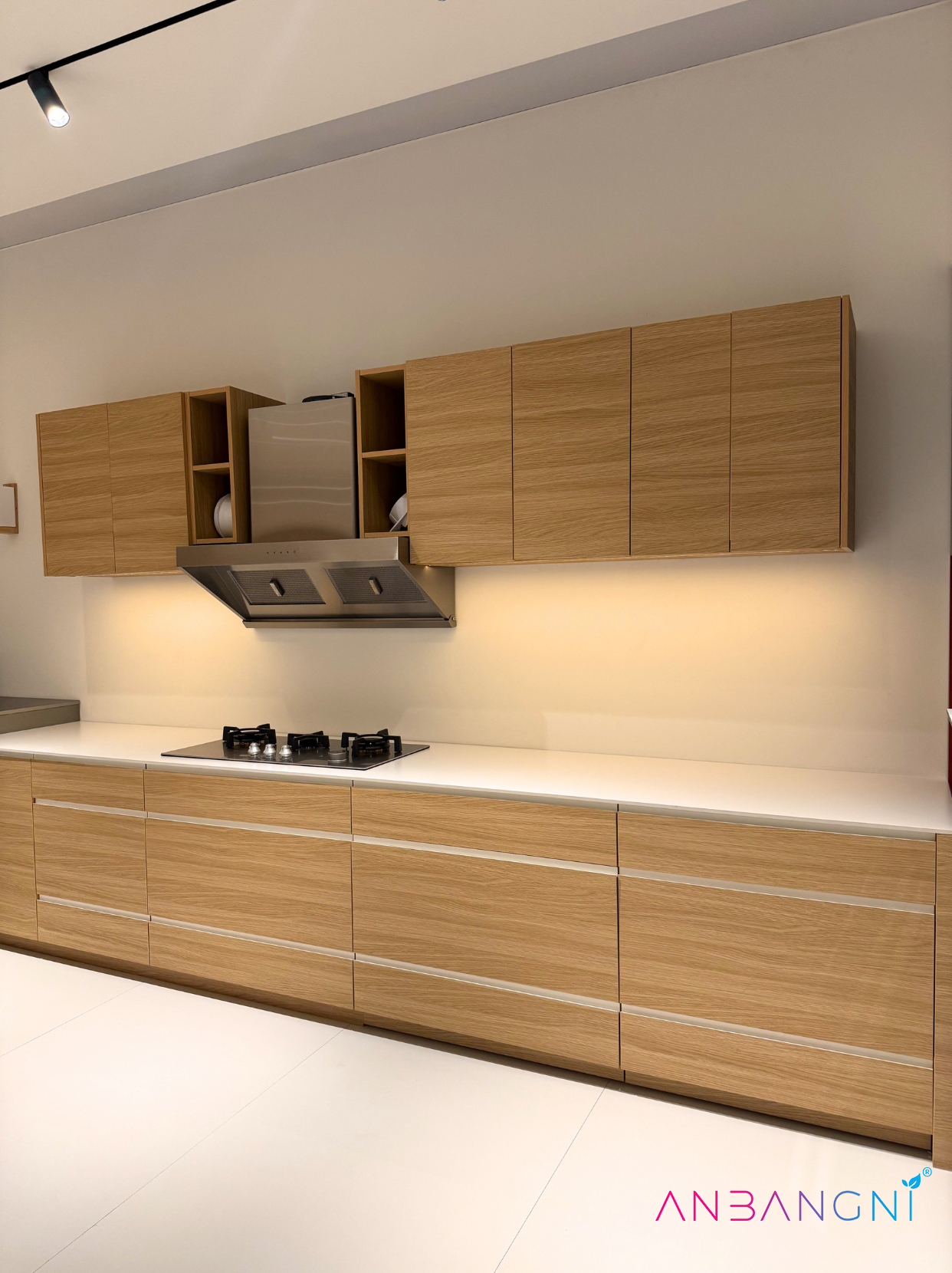
Divide tableware into distinct storage zones
Plates, bowls, and cutlery have distinct storage requirements. When they are crammed into a single space, locating and retrieving them becomes unnecessarily cumbersome.
The showcased Anbangni kitchen utilizes spacious drawers to categorize tableware by type. Plates are neatly stacked, while bowls occupy their own dedicated space nearby. Smaller items are organized in separate trays and compartments.
This layout facilitates easy visual scanning of drawer contents. Additionally, it ensures that each item has a designated spot to be returned to after washing.
For practical kitchen storage cabinets, begin with a few fundamental categories:
-
Daily use plates and bowls: Keep them within easy reach in drawers.
-
Cutlery and small utensils: Utilize shallow trays with separate compartments.
-
Serving dishes: Allocate sufficient space for larger items.
-
Infrequently used tableware: Store it away from the busiest work area.
Consequently, setting the table and putting away dishes become more effortless daily tasks.
Keep cooking utensils within easy reach
Cooking becomes more efficient when the appropriate utensil is readily available. A spatula, whisk, or pair of tongs should be easily identifiable without having to rummage through a pile of utensils.
In the featured layout, elongated compartments separate cooking utensils adjacent to the cooking area. Wider sections accommodate items such as folded cloths and heat-resistant pads. Narrow storage slots, on the other hand, provide a dedicated space for bottles.
The key is to match the compartment to the item. Long utensils require adequate space to lie flat, while smaller accessories benefit from shorter sections.
Placement is also crucial. Keep preparation utensils near the work surface and serving utensils near the dishes. When planning storage beneath a stovetop, ensure the appliance's required clearances are met.
With this approach, custom kitchen cabinets support your workflow during each task.
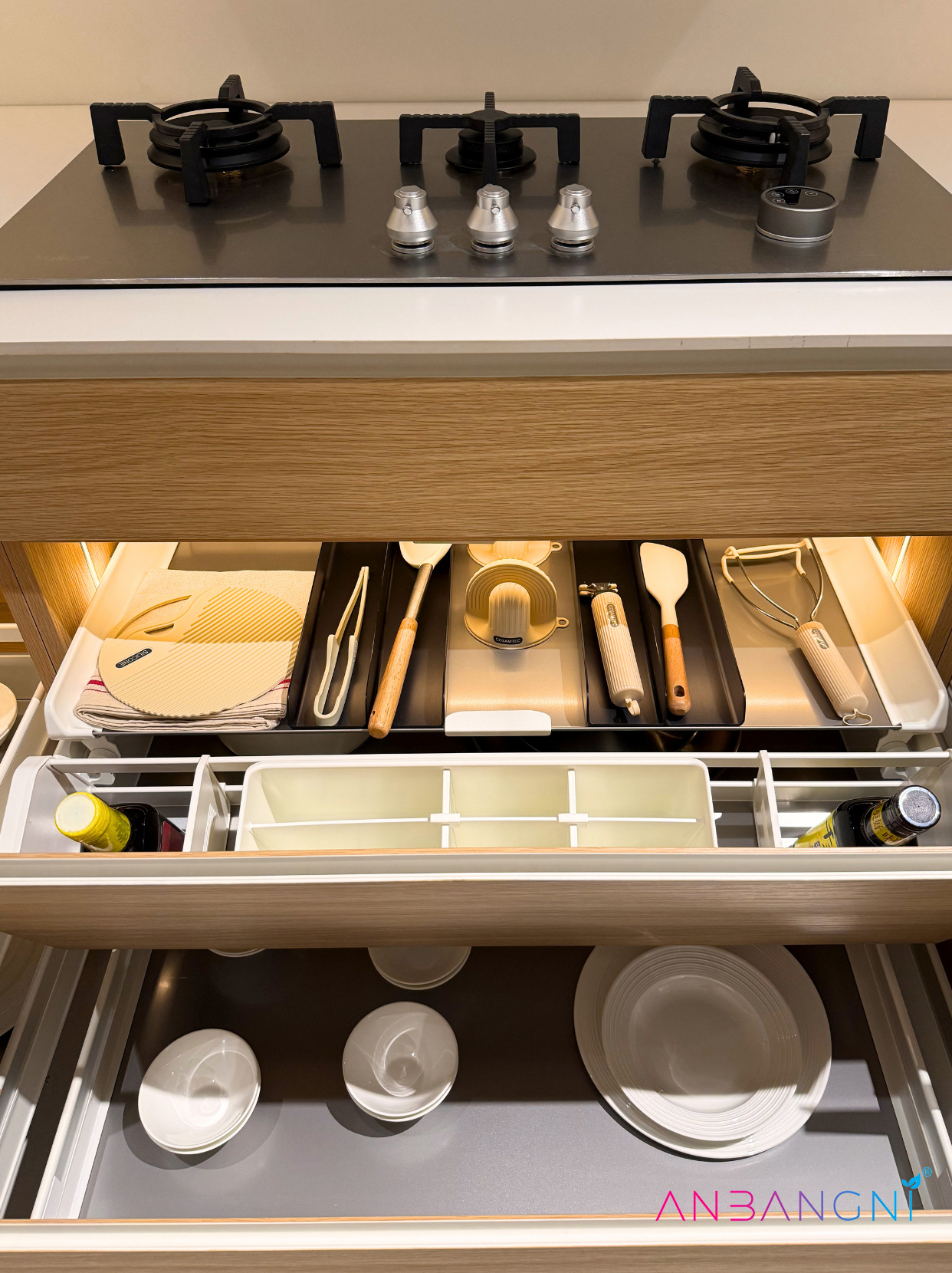
Organize small items with kitchen drawer dividers
Kitchen drawer dividers transform an open drawer into a series of functional compartments. They help separate items that would otherwise overlap or become difficult to locate.
Anbangni's featured drawers integrate narrow utensil compartments, wider storage sections, and custom-fitted trays. This combination accommodates various shapes rather than treating every item identically.
For instance, a narrow compartment can hold cutlery, while a wider tray can accommodate a serving spoon or small kitchen accessories. Deeper sections below can then hold bowls and plates.
To design an effective drawer layout:
-
Measure the drawer's usable internal dimensions.
-
Create a list of the utensils and tableware it needs to store.
-
Select compartment sizes that accommodate these items.
-
Allow sufficient space to comfortably retrieve items.
-
When using stacked trays, ensure easy access to lower storage compartments.
Above all, refrain from adding more compartments than necessary. A few appropriately sized compartments can be more practical than an abundance of small ones.
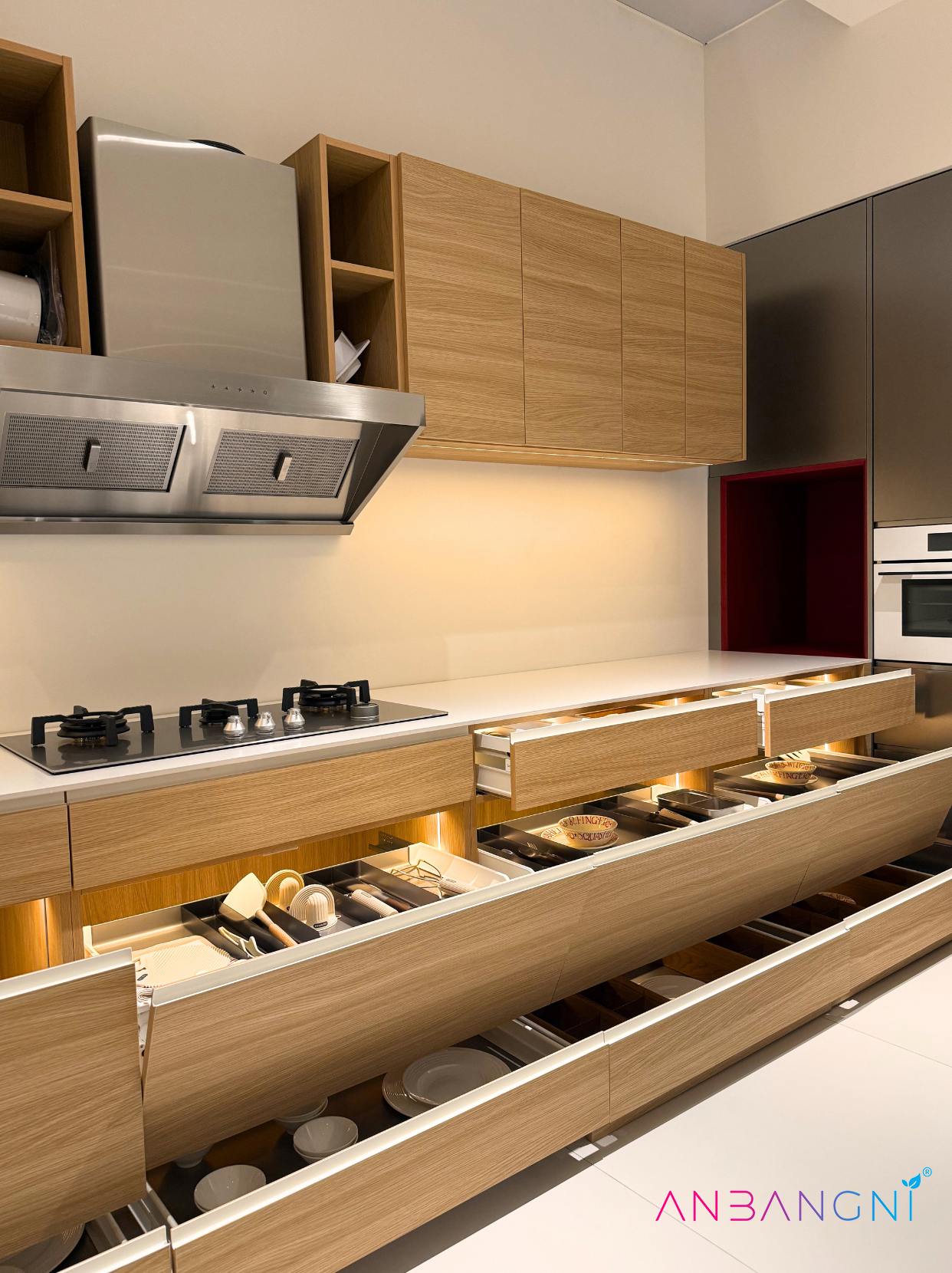
Utilize pull-out storage to bring contents into view
Deep cabinets offer ample storage space, yet the area at the back is often challenging to access. Pull-out storage brings contents forward, enhancing visibility and accessibility.
The showcased Anbangni kitchen incorporates pull-out drawers throughout the base cabinets. When opened simultaneously, they reveal dedicated spaces for tableware, utensils, and bottles. Once closed, the matching fronts maintain a clean and cohesive aesthetic.
The tall cabinet applies the same principle vertically. Multiple pull-out trays divide the interior into distinct storage levels. Dedicated bottle holders and hanging stemware racks also provide designated storage for beverages and glassware.
This demonstrates how pull-out components can cater to various needs within a single cabinet design. However, tray spacing, weight capacity, and door clearance should be tailored to the items being stored.
Plan these details early to ensure each component fits both the cabinet and its intended purpose.
Maximize kitchen corner space
Corners necessitate dedicated storage solutions, particularly in L-shaped and U-shaped kitchens. A deep corner may offer ample space, but items stored at the rear can be difficult to reach.
Corner storage solutions can help integrate this space into your daily routine. Depending on the layout, options may include swing-out trays, rotating shelves, or pull-out corner fittings.
The optimal choice depends on the cabinet opening, internal dimensions, and adjacent doors or drawers. It should also align with your intended storage items.
For example, bulky cookware requires a different arrangement than small food storage containers. Therefore, prioritize the contents first and then select a suitable fitting.
When planned in conjunction with drawer dividers and pull-out units, corner storage contributes to a more comprehensive kitchen storage system.
Pair a clean exterior with a functional interior
Practical storage should complement the overall kitchen design.
In Anbangni's featured kitchen, wood-grain cabinet fronts are paired with light-colored countertops and simple horizontal lines. Wall cabinets provide enclosed storage, while open niches offer space for showcasing select items.
Inside, light-colored trays contrast with darker drawer bases, helping to delineate storage sections. Warm interior lighting also enhances visibility of the cabinet contents.
These details integrate aesthetics with everyday functionality. When closed, the kitchen exudes a sense of visual tranquility, while the organized interior becomes apparent as the drawers are opened.
The same principle can guide a custom cabinetry project: select a cohesive exterior, then assign a specific function to each internal space.
Plan your custom kitchen cabinets with Anbangni
Effective storage begins with understanding your daily routines. Before selecting a layout, consider your cooking habits, the utensils you use most frequently, and the amount of tableware you need to store.
Then, design the layout around these requirements. Utilize kitchen drawer dividers for small items, spacious drawers for dishes, pull-out components for deeper storage, and suitable fittings for corners.
Anbangni's showcased kitchen exemplifies how organized interiors and coordinated cabinet fronts can work synergistically. Every detail contributes to a space where tableware remains neatly organized and kitchen utensils are always within reach.
Contact Anbangni to discuss custom cabinets for your project and explore a kitchen storage layout that suits your space and daily routine.


